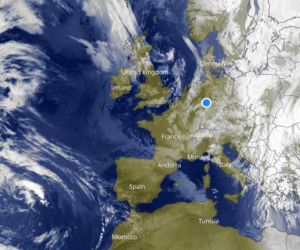
Cloud Cover Radar: Your Essential Guide to Tracking Atmospheric Dynamics and Forecasting Weather
In our increasingly connected world, understanding and predicting weather patterns is more critical than ever. From planning a weekend hike to ensuring safe air travel, accurate weather information is paramount. Among the most powerful tools available for this purpose is the Cloud Cover Map, often powered by sophisticated radar technology. Far more than just a static image, a cloud cover map offers a dynamic, real-time look into the atmosphere, revealing how clouds are moving and hinting at the weather changes to come.
While often used interchangeably, it's helpful to distinguish: a cloud cover map is the visual representation, while radar is the underlying technology that collects the data on cloud movement. This article will delve into the science, interpretation, and practical applications of these invaluable tools, helping you harness their power to better anticipate atmospheric shifts and make informed decisions.
The Science Behind the Cloud Cover Map
At its core, a Cloud Cover Map functions as a sophisticated weather information system, continuously updated to provide readings of clouds and their movements. But how do we "see" something as ethereal as a cloud on a digital display?
Clouds themselves are fascinating atmospheric phenomena, composed of countless tiny water droplets or ice crystals. They form when warm, moist air rises into the atmosphere, cools, and reaches a point where the water vapor within it condenses. This condensation can happen around microscopic particles like dust or salt, forming visible clouds.
The technology that allows us to track these formations is primarily weather radar. Radar systems work by emitting electromagnetic waves into the atmosphere. When these waves encounter objects like water droplets or ice crystals within clouds, they are reflected back to the radar antenna. By analyzing the time it takes for the waves to return and the strength of the reflected signal, meteorologists can determine the location, height, and density of clouds. Modern Doppler radar, in particular, can also detect the movement of these clouds by measuring the shift in frequency of the reflected waves – similar to how a police radar gun works to measure vehicle speed.
It's crucial to understand that while a cloud cover map generated by radar shows cloud movement, it doesn't directly display rain or snow. Precipitation typically moves slower than cloud systems and involves larger, heavier water particles. However, tracking cloud movement is an essential precursor to predicting where and when precipitation might occur, as clouds are the very source of rain and snow. In addition to radar, satellite imagery also plays a significant role, providing a broader, often global, perspective on cloud distribution and types.
Deciphering Cloud Movement: What the Colors and Directions Mean
Interpreting a Cloud Cover Map is a skill that empowers you to look beyond current conditions and anticipate future weather. Most online platforms and apps that provide cloud cover maps feature a "play button" or animation control, allowing you to review the movement of clouds over the past hour or several hours. This historical playback is invaluable for understanding the trajectory and speed of an approaching or departing weather system.
The visual cues on a cloud cover map are designed to convey information quickly:
- Movement Strength and Speed: The colors displayed on the map are key indicators of cloud motion. Generally, lighter colors might indicate slight or slow movement, suggesting stable weather conditions or only minor changes. In contrast, darker, more intense colors typically signify very strong and rapid cloud movement. This rapid motion is often a strong indicator of unsettled or even severe weather, such as an approaching cold front, a developing storm system, or high winds at altitude.
- Directional Flow: If you observe a uniform color moving consistently in one direction, it means the entire cloud mass is advancing in that trajectory. This can help you predict which areas will soon be under cloud cover or experience a change in conditions.
- Multiple Colors and Directions: Seeing a patchwork of different colors and movements on the radar usually suggests complex and often unsettled weather. This can indicate colliding air masses, localized disturbances, or atmospheric instability, where different layers of clouds are moving in varying directions or at different speeds. Such conditions often precede chaotic or rapidly changing weather patterns.
- No Apparent Movement: If the radar shows very little to no cloud movement, it's generally a sign that the current weather conditions are stable and unlikely to change significantly in the immediate future. While this often means good weather, it could also imply persistent, stagnant conditions depending on the existing cloud cover.
By learning to recognize these patterns, you can gain a deeper understanding of atmospheric dynamics, moving beyond simple temperature readings to grasp the underlying forces driving our weather.
Practical Applications: Who Benefits from Cloud Cover Maps?
The utility of an accurate Cloud Cover Map extends across a wide spectrum of users, from everyday citizens making daily plans to professionals whose livelihoods depend on precise weather intelligence. This tool's popularity stems from its ability to provide real-time, actionable insights into cloud movement and potential weather changes.
- Pilots and Aviation Professionals: For pilots, understanding cloud cover is non-negotiable. It dictates visibility, potential turbulence, and the need for instrument flight rules. Cloud cover maps help them assess flight paths, anticipate changes in cloud ceiling, and identify areas of active weather to avoid for passenger safety and operational efficiency.
- Sailors and Windsurfers: Those on the water are highly susceptible to sudden weather shifts. Cloud movement can signal changes in wind direction, strength, and the approach of storms. A cloud cover map is an indispensable tool for safe navigation and competitive advantage.
- Outdoor Enthusiasts: Hikers, campers, cyclists, and anyone planning activities outdoors can use cloud cover maps to make informed decisions. A rapidly approaching dark cloud mass might suggest packing rain gear or altering plans, whereas stable, slow-moving clouds imply fair conditions.
- Amateur Meteorologists and Weather Enthusiasts: For those with a passion for weather, cloud cover maps provide a direct window into atmospheric processes. They can use these maps to observe fronts, track the development of low-pressure systems, and gain a practical understanding of how theoretical meteorological concepts play out in real-time.
- Farmers and Agricultural Workers: Understanding approaching cloud systems can be vital for crop protection, irrigation scheduling, and planning outdoor farm work.
- Event Planners: From concerts to sporting events, cloud cover maps help event organizers anticipate weather risks and implement contingency plans, ensuring the safety and comfort of attendees.
The ability to track cloud movement empowers users to anticipate conditions, plan more effectively, and react proactively to changing weather, enhancing safety and overall preparedness.
Beyond Local: Understanding Global Cloud Cover Patterns
While local radar provides immediate insights into moving cloud systems, the concept of a Cloud Cover Map also extends to global cloud cover, offering a broader perspective on Earth's atmospheric dynamics. Cloud cover is not uniform across the world; it exhibits significant variability influenced by a multitude of factors, including large-scale atmospheric circulation, humidity levels, and local geography.
Different regions experience varying degrees of cloudiness. Equatorial zones, for instance, often see significant cloud cover due to intense solar heating causing moist air to rise and condense. Conversely, desert regions are characterized by persistent clear skies. Geographical features play a massive role; mountains force air to rise and cool, often leading to cloud formation on their windward sides, while prevailing winds and ocean currents redistribute moisture and temperature, influencing cloud patterns.
Scientists and cartographers, like Johannes Kroeger, have created average cloud cover maps based on daily high-resolution satellite images. These maps illustrate the medium cloud cover experienced globally over extended periods, providing insights into climatic patterns rather than immediate weather. For example, specific zones in Antarctica show distinct cloud densities – a region offshore with pack ice, coastal ice shelves, and the higher actual land – each contributing to unique cloud formations due to temperature gradients and topography.
Understanding these global and average cloud cover maps helps us grasp long-term climate trends, the impact of geographical features on weather, and the intricate dance of Earth's atmospheric systems at a macro level. While radar gives us the real-time "now-cast" and short-term forecast, these global views paint a picture of our planet's ongoing climatic story.
Maximizing Your Cloud Cover Map Experience
To truly leverage the power of a Cloud Cover Map for forecasting and planning, consider these actionable tips:
- Combine with Precipitation Radar: While cloud cover maps show movement, they are best used in conjunction with precipitation radar, which specifically tracks rain and snow. This combination gives you a comprehensive view: where clouds are moving, and which of those clouds are actively producing precipitation.
- Cross-Reference with Other Weather Data: Always integrate cloud movement data with other meteorological information. Check temperature, wind speed and direction, atmospheric pressure, and dew point. A rapid drop in pressure coupled with fast-moving dark clouds, for instance, is a much stronger indicator of severe weather than just cloud movement alone.
- Understand Time Scales: Cloud cover maps are excellent for short-term forecasting, typically for the next 1-6 hours. They help confirm the direction and speed of approaching systems, but for longer-term predictions, you'll need to consult broader forecast models.
- Utilize Animation Features: Don't just look at a static image. Always use the animation or playback feature to observe the progression of clouds over time. This helps you grasp the dynamics and momentum of a weather system.
- Be Aware of Limitations: Remember that radar can sometimes be blocked by terrain (mountains) or experience signal attenuation in very heavy precipitation. Also, interpreting radar requires some practice; what looks like a strong storm might simply be a dense, but benign, cloud layer, though prudence always dictates caution.
By integrating these practices, you transform a simple visual aid into a powerful forecasting tool, enhancing your ability to anticipate and prepare for atmospheric changes.
Conclusion
The Cloud Cover Map, powered by advanced radar technology, stands as an indispensable tool in modern weather prediction. By allowing us to visualize the invisible dance of water vapor and ice crystals across our skies, it provides critical insights into the dynamic processes that shape our daily weather. From understanding the nuanced interpretation of colors and movements to appreciating its diverse practical applications for everyone from pilots to outdoor enthusiasts, this technology empowers us to track movement and forecast weather changes with greater confidence and precision. As meteorological science and technology continue to evolve, cloud cover mapping will only become more sophisticated, offering even clearer windows into our ever-changing atmosphere.