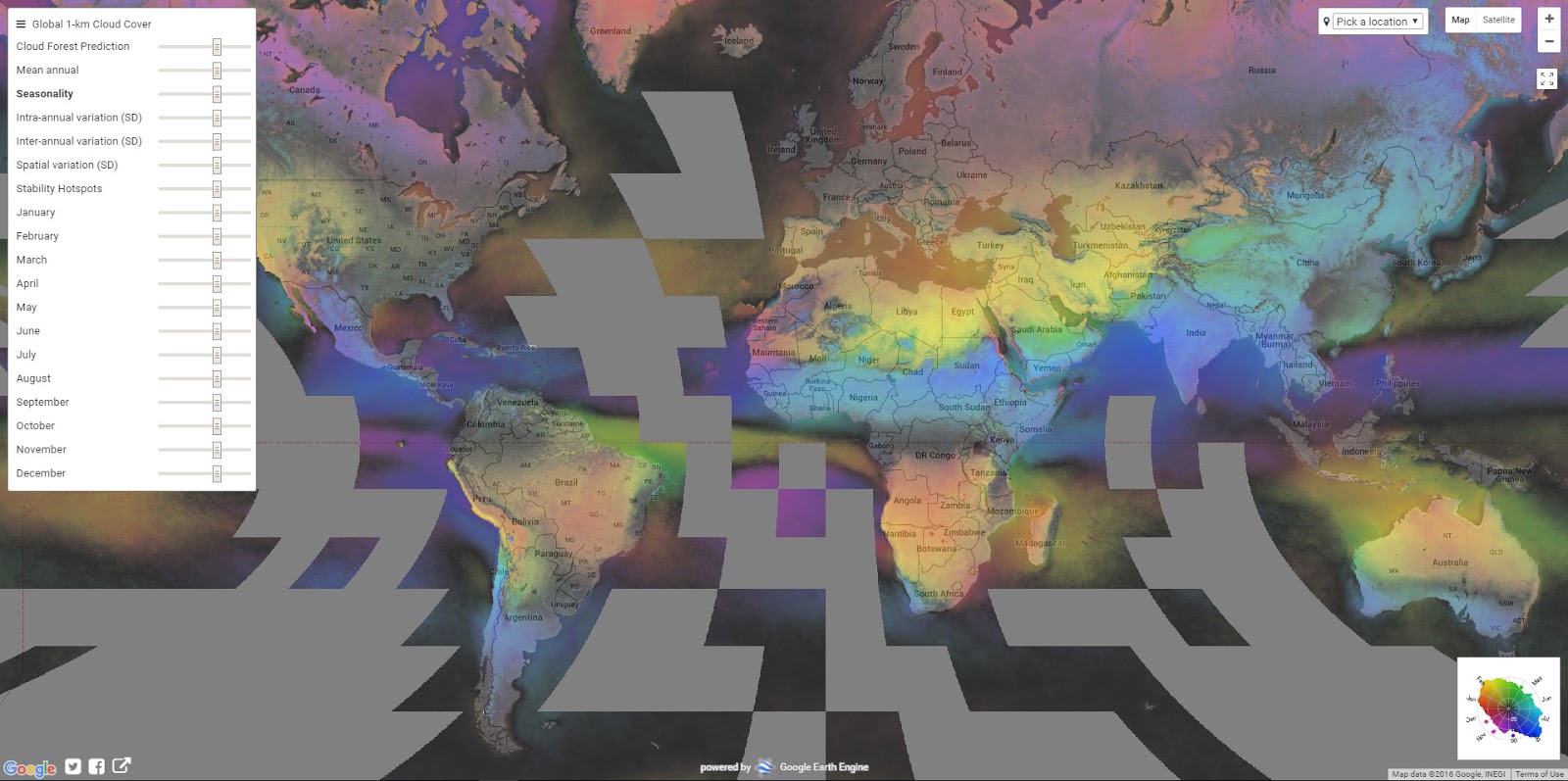
Understanding the Global Cloud Cover Map: Your Window to Weather
In our increasingly interconnected world, understanding global weather patterns is not just a scientific pursuit but a practical necessity for daily life, travel, and various industries. At the heart of this understanding lies the Cloud Cover Map – an indispensable tool for meteorologists and enthusiasts alike. This sophisticated weather information system provides a dynamic, real-time view of cloud distribution and movement across the planet, offering crucial insights into developing weather fronts and atmospheric conditions.
A Cloud Cover Map isn't just a static image; it's a living snapshot of the atmosphere, constantly updated to reflect the ever-changing skies. Accessible online or via dedicated apps, these maps serve a diverse audience, from professional pilots planning flight paths and sailors navigating seas, to farmers monitoring for frost and everyday individuals simply curious about tomorrow's forecast. Its widespread adoption underscores its utility and popularity among weather information systems.
How Cloud Cover Maps Work: The Science Behind the Sight
The magic of a cloud cover map lies in its underlying technology, primarily radar. Weather radar systems work by emitting electromagnetic waves into the atmosphere. When these waves encounter objects like water vapor or ice crystals suspended in the air – which are the very components of clouds – they are reflected back to the radar receiver. By analyzing these reflected waves, sophisticated algorithms can determine not only the presence of clouds but also their altitude, density, and crucially, their direction and speed of movement.
It's important to clarify a common misconception: a Cloud Cover Map primarily tracks cloud movement, not precipitation like rain or snow directly. While clouds are precursors to precipitation, rainfall and snowfall often develop and move at different speeds than the cloud formations themselves. Therefore, while you might observe significant cloud movement on the map, immediate rain or snow might not be imminent. This distinction is vital for accurate weather interpretation and underscores the need to consult additional weather data for a complete picture.
Decoding Cloud Movement and Intensity
One of the most powerful features of a global Cloud Cover Map is its ability to illustrate cloud dynamics. Most modern maps include a "play button" function, allowing users to replay cloud movements over the past hour or even longer. This animation helps visualize the trajectory and evolution of weather systems, providing a predictive element to current observations.
Interpreting the Visuals: Colors and Patterns
The visual representation on a cloud cover map is key to its interpretation. Colors are often used to indicate the strength or speed of cloud movement. Generally, the darker the color displayed on the radar, the stronger and faster the cloud movement. For instance, a very dark patch on the radar usually signifies clouds moving at high speeds in a particular direction. This rapid movement is frequently associated with more unsettled or severe weather conditions, such as approaching storms, strong winds, or significant atmospheric disturbances.
Conversely, if you observe only a slight movement represented by lighter colors or less distinct patterns, it typically indicates stable weather conditions that are unlikely to change dramatically in the near future. When the map displays multiple colors in different areas, it's often a sign of complex, unsettled weather, where various cloud systems are moving in conflicting directions. Such scenarios can lead to localized weather phenomena and unpredictable changes. If there's no discernible movement on the radar, it's usually an indication that the current weather will persist without significant changes.
To truly master the art of weather prediction using these tools, it's beneficial to combine the insights from a Cloud Cover Map with other meteorological data, such as pressure systems, temperature gradients, and wind forecasts. This holistic approach offers a much more robust and accurate forecast. For an even deeper dive into real-time tracking, consulting a Cloud Cover Radar can provide additional layers of dynamic information.
The Science Behind Clouds and Global Distribution
Clouds, at their most fundamental level, are visible masses of tiny water droplets or ice crystals suspended in the Earth's atmosphere. They form when moist air rises, cools, and reaches its dew point, causing the water vapor within it to condense around microscopic particles like dust or pollen. The type of cloud that forms is influenced by altitude, temperature, and humidity. Common types include fluffy, white cumulus clouds often seen on fair-weather days; layered, gray stratus clouds that can bring drizzle; and high-altitude, wispy cirrus clouds, which frequently signal changing weather patterns.
Why Cloud Cover Varies Across the Globe
The distribution of cloud cover is anything but uniform across the world, exhibiting remarkable variability due to a complex interplay of atmospheric forces. Factors such as global atmospheric circulation patterns (like the Hadley, Ferrel, and Polar cells), varying humidity levels, local geographical features (mountains, large water bodies), prevailing winds, and ocean currents all contribute to this uneven distribution.
For example, regions near the equator often experience significant cloud cover due to intense solar heating causing moist air to rise rapidly and condense, forming towering cumulonimbus clouds and frequent thunderstorms. Conversely, subtropical desert regions often feature persistently clear, cloudless skies due to descending dry air masses. Large oceans, especially where warm and cold currents meet, can also be areas of significant cloud formation due to the interaction of different air masses.
Illustrative maps, such as the average cloud cover map created by Johannes Kroeger, visually confirm these global patterns. These maps compile data from daily high-resolution satellite images over an extended period to show the median cloud cover experienced at every location on the planet. Antarctica, for instance, presents a fascinating case study, often showing distinct zones of cloud density that correlate with its unique geography: a region offshore with pack ice, the coastal ice shelves, and the higher landmass of the continent itself. While the precise scientific explanation is complex, it highlights how variations in surface type, temperature, and moisture sources profoundly impact local cloud formation.
Practical Applications and Advanced Insights
The utility of a global Cloud Cover Map extends far beyond basic weather curiosity. Its sophisticated data empowers various professionals and hobbyists to make informed decisions and enhance safety. Pilots use them for pre-flight planning, identifying potential turbulence, icing conditions, or routes with clearer skies. Mariners and windsurfers rely on them to anticipate wind shifts, track approaching storms, and ensure safer passage. Farmers use cloud cover information to predict frost, assess solar radiation for crop growth, or plan irrigation schedules. Even photographers and astronomers leverage these maps to find optimal conditions for their work.
Beyond Basic Movement: Integrating Data for Superior Forecasts
While the visual representation of cloud movement is incredibly valuable, the true power of these systems emerges when integrated with other meteorological data. High-resolution satellite imagery, like that provided by NASA, offers an unparalleled view of global cloud systems, allowing scientists to track everything from hurricanes to dust storms. These images, sometimes requiring complex conversions between map projections to be fully utilized, form the backbone of modern weather modeling.
For advanced weather forecasting, cloud cover data is fed into numerical weather prediction models alongside observations of temperature, atmospheric pressure, humidity, and wind shear. This comprehensive input allows meteorologists to create highly sophisticated forecasts, predicting not just cloud presence and movement, but also the likelihood and intensity of precipitation, severe weather events, and long-range climate patterns. Understanding these intricate interactions means that a seemingly simple Cloud Cover Map is actually a gateway to a vast and complex world of atmospheric science, offering invaluable insights for anyone interested in the weather.
Conclusion
The Cloud Cover Map is a testament to technological advancement in meteorology, transforming how we perceive and interact with global weather. From helping you decide whether to carry an umbrella to aiding critical decisions in aviation and maritime navigation, these maps provide an accessible yet powerful window into the Earth's dynamic atmosphere. By understanding how to interpret cloud movement, intensity, and global distribution patterns, we can all become more informed observers of our environment, better prepared for whatever weather lies ahead. Embrace this powerful tool to deepen your understanding of the ever-unfolding story written in the skies above.