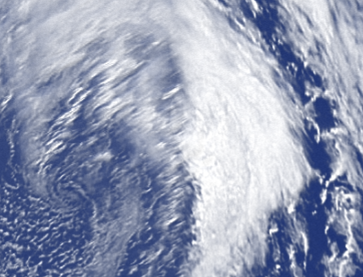
How to Read a Cloud Cover Map: Your Guide to Weather Prediction
In a world increasingly dependent on accurate forecasts, understanding the subtle cues of nature can make all the difference. Among the most powerful tools in a meteorologist's arsenal, and increasingly accessible to the everyday enthusiast, is the cloud cover map. More than just a visual representation of the sky, these dynamic maps offer a window into the atmosphere's current state and its future trajectory, empowering you to predict local weather patterns with remarkable precision. This comprehensive guide will walk you through the essential elements of reading and interpreting a cloud cover map, transforming you into a more informed weather observer.
What is a Cloud Cover Map and How Does it Work?
At its core, a cloud cover map is a sophisticated weather information system that provides regularly updated readings of cloud formations and, crucially, their movements. Unlike static images, these maps are dynamic, offering a real-time (or near real-time) perspective on atmospheric conditions across vast regions. They are an indispensable component of modern weather forecasting, painting a vivid picture of how weather systems are developing.
The technology behind these maps primarily relies on radar systems. Weather radar works by emitting electromagnetic waves into the atmosphere. When these waves encounter objects like water vapor, ice crystals (which form clouds), or precipitation, they are reflected back to the radar receiver. By analyzing the time it takes for the waves to return and the strength of the reflected signal, meteorologists can determine the location, altitude, and density of clouds. For a deeper dive into this technology, explore our article on Cloud Cover Radar: Track Movement, Forecast Weather Changes.
It's vital to note a key distinction: a cloud cover map primarily shows the movement of clouds, not necessarily the immediate presence of rain or snow. While precipitation certainly originates from clouds, rain and snowfall are often significantly slower in their movement than the clouds themselves. Therefore, you might observe rapid cloud movement on the map without experiencing immediate downpours. This distinction is crucial for accurate interpretation – clouds are the precursors, not always the direct manifestation, of precipitation.
Deciphering Cloud Movement and Speed
The real predictive power of a cloud cover map lies in its ability to illustrate movement. Most online or app-based cloud maps feature a "play" button or animation loop, allowing you to observe the movement of clouds over the last hour or several hours. This playback feature is invaluable for understanding the direction and speed of atmospheric currents.
Beyond simple direction, the maps often use a color-coding system to indicate the strength or speed of cloud motion. This is where your predictive skills truly come into play:
- Darker Colors: If you observe darker colors on the radar, it typically signifies that the clouds are moving very fast in that particular direction. Rapid cloud movement is often a significant indicator of unsettled or potentially adverse weather. This could be due to strong winds, an approaching weather front, or the development of a storm system. It's a signal to pay closer attention to other weather indicators.
- Lighter Colors or Slight Movement: Conversely, if the map displays only a slight movement, or lighter colors indicating less vigorous motion, it generally suggests stable weather conditions. This usually means the current weather will hold, or any changes will be gradual and minor.
- Multiple Colors and Directions: When the map shows clouds moving in different directions, indicated by a mosaic of varying colors and trajectories, it's a strong sign of unsettled weather. This often points to conflicting air masses, localized disturbances, or atmospheric instability, which can lead to unpredictable conditions, including sudden showers or shifts in wind.
- No Movement: If there's virtually no movement detectable on the radar, it's typically an indication that the weather will not change significantly. Calm, stable conditions are usually associated with stationary cloud cover or clear skies.
Understanding these visual cues allows you to anticipate whether a clear morning will remain clear, or if those wispy clouds on the horizon are rapidly advancing harbingers of change.
Beyond Movement: Understanding Cloud Types and Global Patterns
While movement is key, a deeper understanding of clouds themselves enhances your ability to predict weather. Clouds are formed when moist air rises, cools, and condenses into tiny water droplets or ice crystals. The types of clouds that form depend heavily on altitude, temperature, and humidity levels, each offering unique insights into the atmospheric state:
- Cumulus Clouds: Often described as fluffy and white, these fair-weather clouds indicate stable conditions, though towering cumulus can develop into cumulonimbus (thunderstorm) clouds if atmospheric instability increases.
- Stratus Clouds: Forming in layers and appearing gray, stratus clouds often bring overcast skies, drizzle, or light snow, signifying stable but often damp conditions.
- Cirrus Clouds: These high-altitude, wispy clouds, made of ice crystals, often signal changing weather, sometimes preceding a warm front or a shift in the jet stream.
Beyond local observations, cloud cover maps also reveal fascinating global patterns. Cloud cover is far from uniform across the world; it exhibits significant variability influenced by a multitude of factors, including atmospheric circulation cells (like the Hadley, Ferrel, and Polar cells), humidity levels, prevailing winds, and even ocean currents. Some regions, like the tropics, often experience persistent cloud cover due to convective activity, while arid regions frequently enjoy clear, cloudless skies. Maps like those compiled by NASA or by researchers like Johannes Kroeger (based on daily high-resolution satellite imagery) illustrate these average global patterns, highlighting zones of persistent cloudiness or clarity. The unique cloud density zones observed over Antarctica, for example, often correspond to distinct geographical features – the offshore pack ice, coastal ice shelves, and higher landmass – each interacting differently with atmospheric moisture and temperature gradients. To explore this broader perspective, take a look at our guide on Global Cloud Cover Map: Unveiling World Weather Patterns.
Who Benefits from Cloud Cover Maps? Practical Applications
The utility of a cloud cover map extends across a diverse range of users, making it one of the most popular weather information systems available. Its accessibility, often online or via mobile apps, means virtually anyone can tap into its power:
- Weather Enthusiasts and Amateur Meteorologists: For those with a passion for weather, these maps provide a dynamic, real-time dataset to track evolving systems, test personal forecasts, and deepen their understanding of atmospheric science.
- Pilots: Before takeoff, pilots rely heavily on cloud cover maps to assess flight conditions, identify potential areas of turbulence, determine visibility, and plan optimal routes to avoid adverse weather.
- Sailors and Windsurfers: Understanding cloud movement and type is crucial for predicting wind shifts, squalls, and changes in sea state. A cloud map helps them navigate safely and leverage favorable conditions.
- Hikers and Outdoor Adventurers: Whether planning a mountain trek or a day at the beach, knowing the direction and speed of cloud movement can help in preparing for sudden changes in weather, from sunny skies to unexpected showers.
- Farmers and Gardeners: While not directly showing precipitation, tracking cloud development can offer early clues about potential rain or prolonged sun, aiding in irrigation decisions and crop protection.
- The General Public: From deciding whether to carry an umbrella to planning outdoor events, a quick glance at a cloud cover map can significantly improve daily decision-making.
To maximize the predictive power of a cloud cover map, always use it in conjunction with other weather data. Combine cloud movement insights with temperature readings, barometric pressure trends, and traditional precipitation radar to build a holistic and highly accurate forecast. This integrated approach allows for a much more nuanced understanding of the weather unfolding around you.
Mastering the art of reading a cloud cover map is an invaluable skill, transforming you from a passive observer into an active participant in understanding weather. By deciphering the subtle cues of cloud movement, speed, and type, you gain a powerful tool for personal weather prediction. Whether you're an avid adventurer, a professional pilot, or simply someone who wants to know if they'll need a jacket tomorrow, integrating cloud cover maps into your daily routine will undoubtedly enhance your ability to navigate the ever-changing skies.